
Middle States Commission on Higher Education (MSCHE) Reaffirmation of Accreditation
The MSCHE is recognized as an institutional accreditor by the United States Department of Education (USDE) to conduct accreditation and candidate for accreditation status activities for institutions of higher education, including distance education and correspondence education programs offered at those institutions. USDE recognizes accrediting agencies as authorities on the quality of higher education. Under the Higher Education Act’s (HEA’s) federal student aid programs, accrediting agencies recognized by the United States Department of Education must meet the Department’s regulatory criteria. The MSCHE is a title IV gatekeeper, and many institutions access title IV through our accreditation. Part of the work of MSCHE is ensuring institutions remain in compliance with applicable federal requirements, including through their title IV responsibilities.
An institution of higher education is a community dedicated to students, to the pursuit and dissemination of knowledge, to the study and clarification of values, and to the advancement of the society it serves. The MSCHE requires that its institutions meet rigorous and comprehensive accreditation standards, which are addressed in the context of the mission of each institution and within the culture of ethical practices and institutional integrity expected of accredited institutions. In meeting the quality standards of MSCHE accreditation, institutions earn accredited status, assuring students and the public of excellence in higher education.
The MSCHE verifies the quality of higher education through peer review, assessment, and evaluation. An institution is accredited when the educational community has confirmed through self-reflection and peer review that its mission is achieved and progress is made toward institutional goals. The extent to which each institution accepts and fulfills the responsibilities inherent in the process of accreditation is a measure of its commitment to continuous improvement.
The MSCHE Standards for Accreditation and Requirements of Affiliation (Fourteenth Edition) serve as an ongoing guide for institutions considering application for membership, candidate institutions seeking initial accreditation, and accredited institutions striving for reaffirmation through engaged self-reflection and peer evaluation. Institutions are expected to demonstrate compliance with the MSCHE’s Standards for Accreditation, Requirements of Affiliation, policies and procedures, and applicable federal regulatory requirements; conduct their activities in a manner consistent with the standards; and engage in ongoing processes of self-reflection and continuous improvement. Accredited institutions pursue excellence and innovation at all levels through ongoing quality assurance, improvement, innovation, and systematic, periodic, and sustained assessment. In this document, each standard is expressed in one or two sentences and is then followed by criteria, which are used together, within the context of institutional mission, to demonstrate or determine compliance. The criteria specify characteristics or qualities that encompass the standard. The criteria are used holistically to evaluate how an institution meets the standards.
The Middle States Commission on Higher Education (MSCHE or the Commission), is committed to data-based decision making, consistency, and transparency in the assessment of institutional compliance with its standards for accreditation, requirements of affiliation, policies and procedures, and applicable federal regulatory requirements. The purpose of the MSCHE’s Evidence Expectations by Standard Guidelines document is to provide a list of minimum expectations for the types of evidence that an institution must collect, analyze, and submit as part of the self-reflective accreditation review process. This document is not designed to replace the self-reflection and analysis that is a critical component of the accreditation process. Importantly, the list of evidence is based on an analysis of actual institutional submissions and reflects the evidence that institutions and peer evaluators have found most relevant and useful during accreditation activities. This document is a companion document to the Standards for Accreditation and Requirements of Affiliation (Fourteenth Edition)
Please review: MSCHE Standards of Accreditation and Evidence Expectations by Standard.

Five Towns College’s current accreditation status is displayed on the institution’s Statement of Accreditation Status (SAS) page.
Four principles guide the analysis in each of the MSCHE’s seven standards because of their importance in higher education.
- Application of the Standards within the Context of an Institution’s Mission and Goals
- Centrality of the Student Experience
- Emphasis on Data and Evidence-based Decision-making
- Innovation as an Essential Part of Continuous Improvement
Mission-Centric: Guiding Principle 1
The individual mission and goals of each institution remain the context within which our accreditation standards are applied. Our standards intentionally emphasize functions rather than specific structures in recognition of the many different models for educational and operational excellence.
Centrality of the Student Experience: Guiding Principle 2
The standards focus on the student learning experience. Institutions should design and provide student learning experiences aligned with mission, creating an appropriately supportive learning environment and understanding and improving student learning outcomes. An institution’s student learning programs and opportunities must be characterized by rigor, coherence, and appropriate assessment of student achievement throughout the educational offerings, and institutions must offer a curriculum that is designed so that students acquire and demonstrate essential skills including at least oral and written communication, scientific and quantitative reasoning, critical analysis and reasoning, technological competency, and information literacy (Standard III). Consistent with the institution’s mission, the general education program must also include the study of values, ethics, and diverse perspectives (Standard III). Institutions must commit to student retention, persistence, completion, and success through a coherent and effective support system sustained by qualified professionals, which enhances the quality of the learning environment, contributes to the educational experience, and fosters student success (Standard IV).
Data-Based Decision-Making: Guiding Principle 3
The standards reflect our commitment to data-based decision-making. Institutions must analyze a range of data, including disaggregated data, to ensure students are appropriately served and institutional mission and goals are met. Institutions should rely upon the data required by the Commission and additional data used by the institution. Institutions should follow the Commission’s evidence expectations that are reflective of a range of data considerations, consonant with higher education expectations, and consistent with the institution’s mission. Periodic and systematic evaluation and assessment allow institutions to demonstrate commitment to reflection, and our standards provide the opportunity to evaluate progress toward institutional goals. Institutions can leverage periodic assessment through each standard, using assessment results for continuous improvement and innovation to ensure levels of quality for constituents.
Innovation: Guiding Principle 4
Institutions are dynamic organizations that change and evolve for the benefit of their students and communities. The seven standards reflect our commitment to innovation and allow institutions to consider innovative practices in the context of mission and the students served.
To be eligible for, to achieve, and to maintain MSCHE accreditation, an institution must demonstrate that it meets our requirements of affiliation. Compliance is expected to be continuous and will be validated periodically, typically at the time of institutional self-study and during any other evaluation of the institution’s compliance. Once eligibility is established, an institution then must demonstrate on an ongoing basis that it meets the standards for accreditation.
- The institution is authorized or licensed to operate as a postsecondary educational institution and to award postsecondary degrees; it provides written documentation demonstrating both. Authorization or licensure is from an appropriate governmental organization or agency as required by each of the jurisdictions, regions, or countries in which the institution operates.
Institutions that offer only postsecondary certificates, diplomas, or licenses are not eligible for accreditation by the Middle States Commission on Higher Education. - The institution is operational, with students actively enrolled in its degree programs.
- For institutions pursuing candidate for accreditation status or the grant of accreditation, the institution will graduate at least one class before the team visit for the grant of accreditation takes place, unless the institution can demonstrate to the satisfaction of the Commission that the lack of graduates does not compromise its ability to demonstrate that students have achieved appropriate learning outcomes.
- The institution must communicate with the Commission in English, both orally and in writing, including all accreditation materials to support the multi-level accreditation decision-making process.
The Seven Standards Defined
The institution’s mission defines its purpose within the context of higher education, the students it serves, and what it intends to accomplish. The institution’s stated goals are clearly linked to its mission and specify how the institution fulfills its mission.
Criteria
A candidate or accredited institution possesses and demonstrates the following attributes or activities:
- Clearly defined mission and goals that:
- Are developed through appropriate collaborative and inclusive participation by all who facilitate or are otherwise responsible for institutional development and improvement;
- Address external as well as internal contexts and constituencies;
- Are approved and supported by the governing body;
- Guide faculty, administration, staff, and governing structures in making decisions related to planning, resource allocation, program and curricular development, and the definition of institutional and educational outcomes;
- Include support of scholarly inquiry and creative activity, at levels and of the type appropriate to the institution;
- Are publicized and widely known by the institution’s internal stakeholders;
- Are periodically evaluated;
- Institutional goals that are realistic, appropriate to higher education, and consistent with mission;
- Outcomes and student achievement that
- Include retention, graduation, transfer, and placement rates;
- Are supported by administrative, educational, and student support programs and services;
- Prioritize institutional improvement; and
- Periodic assessment of mission and goals to ensure they are relevant and achievable.
Ethics and integrity are central, indispensable, and defining hallmarks of effective higher education institutions. In all activities, whether internal or external, an institution must be faithful to its mission, honor its contracts and commitments, adhere to its policies, and represent itself truthfully.
Criteria
A candidate or accredited institution possesses and demonstrates the following attributes or activities:
- A commitment to academic freedom, intellectual freedom, freedom of expression, and respect for intellectual property rights;
- A climate that fosters respect among students, faculty, staff, and administration from a range of diverse backgrounds, ideas, and perspectives;
- A grievance policy that is documented and disseminated to address complaints or grievances raised by students, faculty, or staff. The institution’s policies and procedures are fair and impartial and assure that grievances are addressed promptly, appropriately, and equitably;
- The avoidance of conflict of interest or the appearance of such conflict in all activities and among all constituents;
- Fair and impartial employment practices, including all phases of hiring, evaluation, promotion, discipline, and separation;
- Honesty and truthfulness in public relations announcements, advertisements, recruiting and admissions materials and practices, as well as in internal communications;
- As appropriate to its mission, has policies, services, or programs in place to:
- Promote affordability and accessibility;
- Enable students to understand funding sources and options, value received for cost, and methods to make informed decisions about incurring debt;
- Compliance with all applicable government laws and regulations and Commission policies and procedures, including but not limited to:
- Required information for students and the public;
- Representation of accreditation status;
- Full disclosure of information on institution-wide assessments, graduation, retention, certification and licensure or licensing board pass rates;
- Institution’s compliance with the Commission’s Requirements of Affiliation;
- Verification of student identity in distance and correspondence education;
- Substantive changes affecting institutional mission, goals, programs, operations, sites, and other material issues which must be disclosed in a timely and accurate fashion; and
- Periodic assessment of ethics and integrity as evidenced in institutional policies, processes, practices, and the manner in which these are implemented.
An institution provides students with learning experiences that are characterized by rigor and coherence at all program, certificate, and degree levels, regardless of instructional modality. All learning experiences, regardless of modality, program pace/schedule, level, and setting are consistent with higher education expectations.
Criteria
A candidate or accredited institution possesses and demonstrates the following attributes or activities:
- Certificate, undergraduate, graduate, and/or professional programs leading to a degree or other recognized higher education credential:
- Are designed to foster a coherent student learning experience and to promote synthesis of learning;
- Are assigned a reasonably approximate number of credit hours (or other value) for the amount of work completed by a student;
- Include sufficient course content and program length appropriate to the objectives of the degree or other credential;
- Student learning experiences that are designed, delivered, and assessed by faculty (full-time or part-time) and/or other appropriate professionals who are:
- Rigorous and effective in teaching, assessment of student learning, scholarly inquiry, and service, as appropriate to the institution’s mission, goals, and policies;
- Qualified for the positions they hold and the work they do;
- Sufficient in number with a core of faculty (full- or part-time) and/or other appropriate professionals with sufficient responsibility to the institution to assure the continuity and coherence of the institution’s educational programs;
- Provided with and utilize sufficient opportunities, resources, and support for professional growth and innovation;
- Reviewed regularly and equitably based on written, disseminated, clear, and fair criteria, expectations, policies, and procedures;
- Academic programs of study that are clearly and accurately described in official publications of the institution in a way that students are able to understand and follow degree and program requirements and expected time to completion;
- Sufficient learning experiences and resources to support both the institution’s programs of study and the academic progress of all student populations;
- At institutions that offer undergraduate education, a general education program, free standing or integrated into academic disciplines, that:
- Offers a sufficient scope to draw students into new areas of intellectual experience, expanding their cultural and global awareness and cultural sensitivity, and preparing them to make well-reasoned judgments outside as well as within their academic field;
- Offers a curriculum designed so that students acquire and demonstrate essential skills including at least oral and written communication, scientific and quantitative reasoning, critical analysis and reasoning, technological competency, and information literacy. Consistent with mission, the general education program also includes the study of values, ethics, and diverse perspectives;
- In non-US institutions that do not include general education, provides evidence that students can demonstrate general education skills;
- In institutions that offer graduate and professional education, opportunities for the development of research, scholarship, and independent thinking, provided by faculty and/or other professionals with credentials appropriate to graduate-level curricula;
- Adequate and appropriate institutional review and approval on any student learning opportunities designed, delivered, or assessed by third-party providers; and
- Periodic assessment of the effectiveness of student learning experiences for all student populations.
Across all educational experiences, settings, levels, and instructional modalities, the institution recruits and admits students whose interests, abilities, experiences, and goals are congruent with its mission and educational offerings. The institution commits to student retention, persistence, completion, and success through a coherent and effective support system sustained by qualified professionals, which enhances the quality of the learning environment, contributes to the educational experience, and fosters student success.
Criteria
A candidate or accredited institution possesses and demonstrates the following attributes or activities:
- Clearly stated, ethical policies, practices, and processes to recruit, admit, retain, and facilitate the success of students whose interests, abilities, experiences, and goals provide a reasonable expectation for success and are compatible with institutional mission, including:
- Accurate and comprehensive information regarding expenses, financial aid, scholarships, grants, loans, repayment, and refunds;
- A process by which students who are not adequately prepared for study at the level for which they have been admitted are identified, placed, and supported in attaining appropriate educational outcomes;
- Orientation, advisement, and counseling programs to enhance retention and guide students throughout their educational experience;
- Processes designed to enhance student achievement including certificate and degree completion, transfer to other institutions, and post-completion placement;
- Processes to disaggregate and analyze student achievement data to inform and implement strategies that improve outcomes for all student populations;
- Fair and transparent policies and procedures regarding evaluation and acceptance of transfer credits, credits awarded through experiential learning, prior non-academic learning, competency-based assessment, and other alternative learning approaches;
- Policies and procedures for the safe and secure maintenance and appropriate release of student information and records;
- If offered, athletic, student life, and other extracurricular activities that are regulated by the same academic, fiscal, and administrative principles and procedures that govern all other programs;
- If applicable, adequate and appropriate institutional review and approval of student support services designed, delivered, or assessed by third-party providers; and
- Periodic assessment of the effectiveness of student support services for all student populations with appropriate metrics and evaluation.
Assessment of student learning and achievement demonstrates that the institution’s students have accomplished educational goals consistent with their program of study, degree level, the institution’s mission, and appropriate expectations for institutions of higher education.
Criteria
A candidate or accredited institution possesses and demonstrates the following attributes or activities:
- Clearly stated student learning outcomes at the institution and degree/program levels, which are interrelated with one another, with relevant educational experiences, and with the institution’s mission;
- Organized and systematic assessments, conducted by faculty and/or appropriate professionals, evaluating the extent of student achievement of institutional and degree/program goals. Institutions should:
- Define student learning outcomes that are appropriate to higher education with defensible standards for assessing whether students are achieving those outcomes;
- Articulate how they prepare students in a manner consistent with their mission for successful careers, meaningful lives, and, where appropriate, further education. They collect and provide data on the extent to which they are meeting these goals;
- Support and sustain assessment of student learning outcomes and communicate the results of this assessment to stakeholders;
- Consideration and use of disaggregated assessment results for all student populations for the improvement of student learning outcomes, student achievement, and institutional and program-level educational effectiveness;
- If applicable, adequate and appropriate institutional review and approval of assessment services designed, delivered, or assessed by third-party providers; and
- Periodic assessment of the effectiveness of assessment policies and processes utilized by the institution for the improvement of educational effectiveness.
The institution’s planning processes, resources, and structures are aligned with each other and are sufficient to fulfill its mission and goals, to continuously assess and improve its programs and services, and to respond effectively to opportunities and challenges.
Criteria
A candidate or accredited institution possesses and demonstrates the following attributes or activities:
- Institutional and unit goals that are clearly stated, assessed appropriately, linked to mission and goal achievement, reflect conclusions drawn from assessment results, and are used for planning and resource allocation;
- Clearly documented and communicated planning and improvement processes that provide for inclusive constituent participation;
- Planning that integrates goals for institutional effectiveness and improvement, including a focus on student achievement, educational outcomes, overall institutional improvement, and the results of institutional assessments;
- A financial planning and budgeting process that is aligned with the institution’s mission and goals, evidence-based, and clearly linked to the institution’s and units’ strategic plans/objectives;
- Fiscal and human resources as well as the physical and technical infrastructure adequate to support its operations wherever and however programs are delivered;
- Documented financial resources, funding base, and plans for financial development, including those from any related entities adequate to support its educational purposes and programs and to ensure financial stability;
- A record of responsible fiscal management, including preparing a multi-year budget and an annual independent audit confirming financial viability and proper internal financial controls, with evidence of corrective measures taken to address any material findings cited in the audit or an accompanying management letter;
- Well-defined, inclusive decision-making processes and clear assignment of responsibility and accountability for achieving institutional and unit effectiveness;
- Comprehensive planning for facilities, infrastructure, and technology that includes consideration of sustainability and deferred maintenance and is linked to the institution’s strategic and financial planning processes;
- Compliance with its program responsibilities under existing federal title IV and other state laws and regulations, including any audits of financial aid programs as required by federal and state regulations;
- Strategies to measure and assess the adequacy and efficient utilization of institutional resources required to support the institution’s mission and goals; and
- Periodic assessment of the effectiveness of planning, resource allocation, institutional renewal processes, and availability of resources.
The institution is governed and administered in a manner that allows it to realize its stated mission and goals in a way that effectively benefits the institution, its students, and the other constituencies it serves. Even when supported by or affiliated with a related entity, the institution has education as its primary purpose, and it operates as an academic institution with appropriate autonomy.
Criteria
A candidate or accredited institution possesses and demonstrates the following attributes or activities:
- A clearly articulated and transparent governance structure that outlines roles, responsibilities, and accountability for inclusive decision making by each constituency, including the institution’s legally constituted governing body, administration, faculty, staff, and students, as well as any related entities;
- A legally constituted governing body that:
- Serves the public interest, ensures that the institution clearly states and fulfills its mission and goals, has fiduciary responsibility for the institution, and is ultimately accountable for the academic quality, integrity, planning, and fiscal well-being of the institution;
- Has sufficient independence, and expertise to ensure the integrity of the institution. Members must have primary responsibility to the accredited institution, meet regularly, and not allow political, financial, relationship with a related entity, or other undue influences to interfere with their governing responsibilities;
- Ensures that neither the governing body nor its individual members interfere in the day-to-day operations of the institution;
- Oversees at the policy level the quality of teaching and learning, the approval of degree programs and the awarding of degrees, the establishment of personnel policies and procedures, the approval of policies and by-laws, and the assurance of strong fiscal management;
- Plays a basic policy-making role in financial affairs to ensure integrity and strong financial management. This may include a timely review of audited financial statements and/or other documents related to the fiscal viability of the institution;
- Appoints and regularly evaluates the performance of the Chief Executive Officer;
- Is informed in all its operations by principles of good practice in board governance;
- Is not chaired by an institutional or system representative to avoid conflict of interests;
- Establishes and complies with a written conflict of interest policy designed to ensure the impartiality of the governing body by addressing matters such as payment for services, contractual relationships, employment, and family, financial or other interests that could pose or be perceived as conflicts of interest. A majority of members have no employment, family, ownership, or other personal financial interest in the institution;
- Supports the Chief Executive Officer in maintaining the autonomy of the institution;
- Makes freely available to the Commission accurate, fair, and complete information on all aspects of the institution and its operations and ensures the institution describes itself in comparable and consistent terms to all of its accrediting and regulatory agencies.
- Chief Executive Officer who:
- Is appointed by, evaluated by, and reports to the governing body and shall not chair the governing body;
- Has appropriate credentials and professional experience consistent with the mission of the organization;
- Has the authority and autonomy required to fulfill the responsibilities of the position, including developing and implementing institutional plans, staffing the organization, identifying and allocating resources, and directing the institution toward attaining the goals and objectives set forth in its mission;
- Has the assistance of qualified administrators, sufficient in number, to enable the Chief Executive Officer to discharge his/her duties effectively and is responsible for establishing procedures for assessing the organization’s efficiency and effectiveness;
- An administration possessing or demonstrating:
- An organizational structure that is clearly documented and that clearly defines reporting relationships;
- An appropriate size and diverse representation with relevant experience to assist the Chief Executive Officer in fulfilling his/her roles and responsibilities;
- Members with credentials and professional experience consistent with the mission of the organization and their functional roles;
- Skills, time, assistance, technology, and information systems expertise required to perform their duties;
- Regular engagement with faculty and students in advancing the institution’s goals and objectives;
- Systematic procedures for evaluating administrative units and for using assessment data to enhance operations; and
- Periodic assessment of the effectiveness of governance, leadership, and administration.
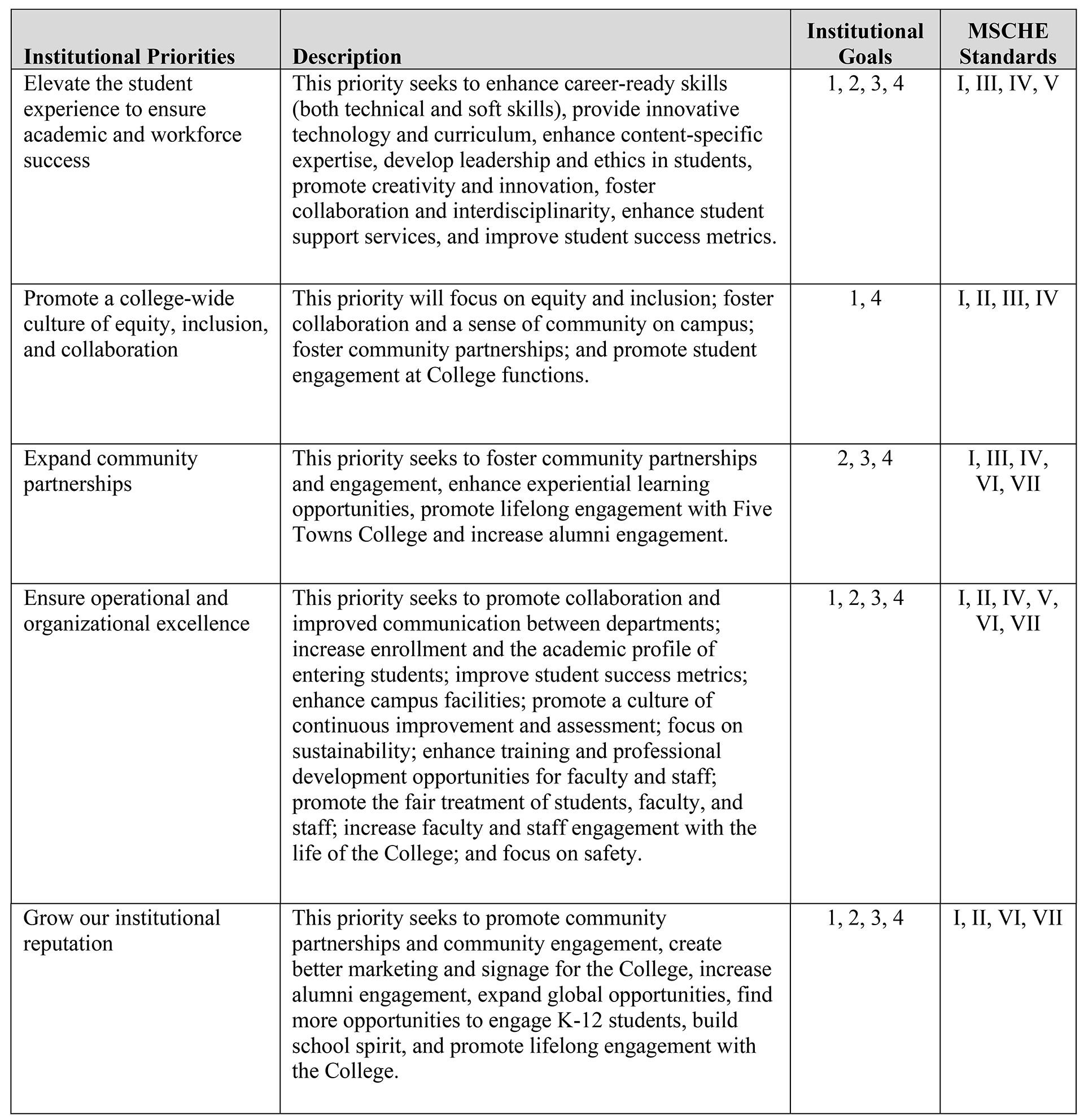
Based on themes that emerged from the departmental strategic planning brainstorming sessions via an inductive qualitative methodology, the College developed five Institutional Priorities to be addressed during the Self-Study process. In the table below, these Institutional Priorities are listed along with a description of each priority and how each priority maps to the College’s current institutional goals and the seven MSCHE Standards. A separate table describing the College’s four institutional goals is also provided.
Five Towns College is committed to the accreditation process established by the MSCHE. The College acknowledges the importance of developing a Self-Study Report that analyzes our strengths and identifies opportunities for continued improvement in order to enhance our overall effectiveness as an institution of higher learning. The Self-Study process will enable the institution to engage in a thorough analysis and evaluation of programs and services, governing and supporting structures, resources, and educational outcomes in relation to the institution’s mission and goals. Specifically, we aim to achieve the following outcomes:
- Demonstrate how the College currently meets the Commission’s Standards for Accreditation and Requirements of Affiliation (Fourteenth Edition) and provides evidence by Standard in alignment with the Evidence Expectations by Standard.
- Leverage periodic assessment through each Standard, using assessment results for continuous improvement and innovation to ensure levels of quality for constituents and the attainment of the institution’s priorities, mission, and goals.
- Engage the College community in an inclusive and transparent self-appraisal process, including analysis of a range of data, including disaggregated data, to ensure students are appropriately served and institutional mission and goals are met.
- To utilize the Self-Study process as an opportunity for institutional renewal, as it will enable us to assess the College’s progress on the development of its next five-year strategic plan and will help to further inform the development of institutional core values and a vision statement, as well as the assessment of its current mission and goals. The Self-Study process will support and inform the development of the College’s strategic plan and the assessment of strategic initiatives, based on identified areas of strength and opportunities for improvement.
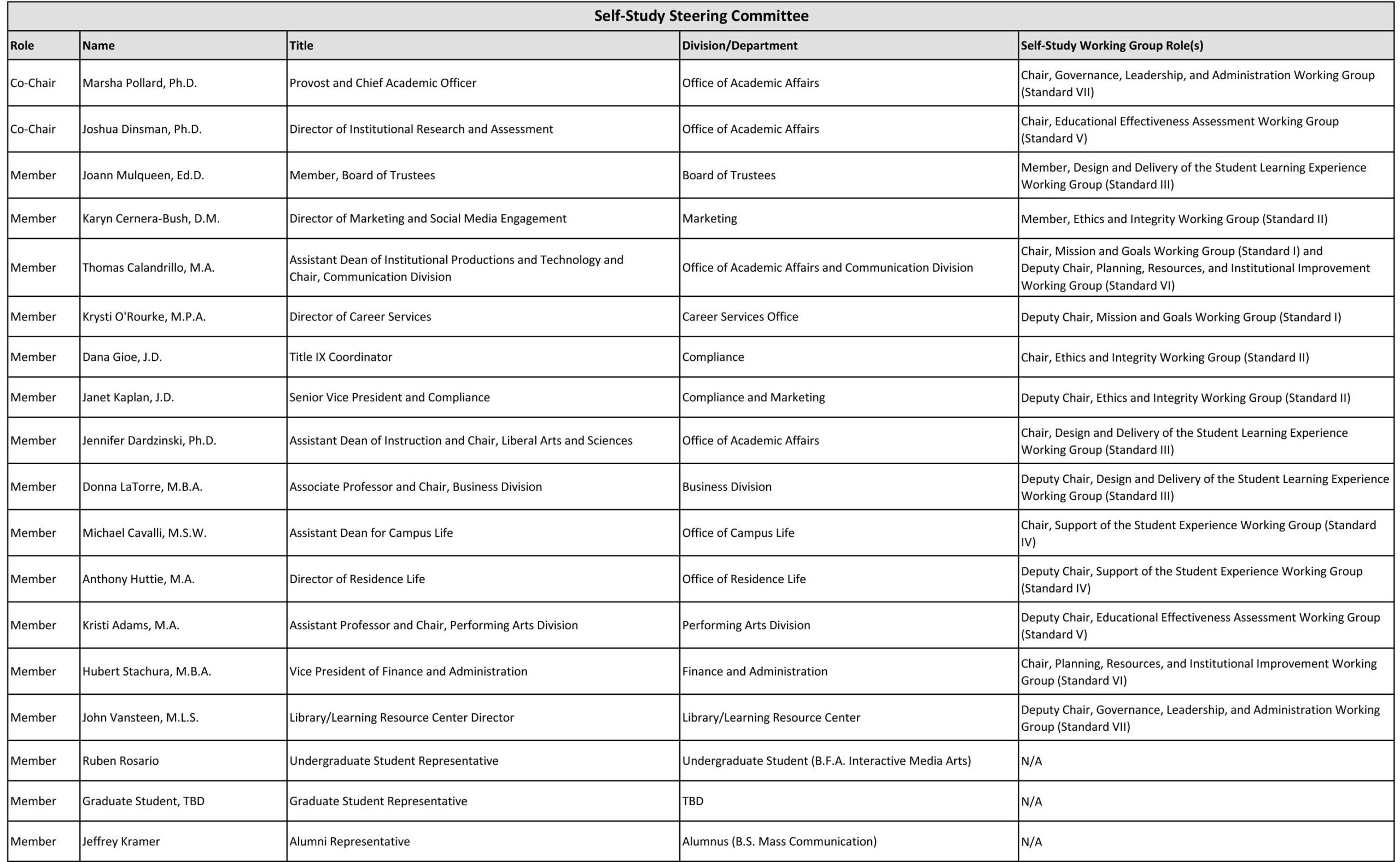
Five Towns College has established a Middle States Commission on Higher Education (MSCHE) Reaffirmation of Accreditation Steering Committee and seven Working Groups, one for each of the seven Standards, to lead and write the Self-Study Report and to prepare for the Spring 2027 team site visit.
Steering Committee
The Steering Committee will be led by Co-Chairs Dr. Marsha Pollard, Provost and Dr. Joshua Dinsman, Director of Institutional Research and Assessment. Dr. Dinsman also serves as the College’s Accreditation Liaison Officer (ALO). The Steering Committee is comprised of individuals selected for their experience, expertise in the specific area and/or in accreditation, quality of work, leadership capabilities, and/or to provide individual growth opportunities for those interested in learning more about institutional accreditation. In addition to the Co-Chairs, the Steering Committee will be composed of a member of the College’s Board of Trustees, an undergraduate and graduate student representative, and the Chair and Deputy Chair of each of the seven Working Groups. The table below presents the members of the Steering Committee, along with their roles both on the Steering Committee and within the various Working Groups.
Responsibilities of the MSCHE Steering Committee
The Steering Committee will encourage consultation across Working Groups to avoid duplication of effort and to identify linkages among related areas that will be important to the Self-Study process. In its regular meetings, the Steering Committee will identify common areas of inquiry and overlap among the Working Groups and coordinate communication among them. Because the Working Group Chairs and Deputy Chairs also serve as members of the Steering Committee, oversight of the Working Groups is embedded in the organizational structure of the Self-Study process.
The Steering Committee is charged with providing leadership for the 2026/27 Self-Study for Reaffirmation of MSCHE Accreditation. During the next two-and-a-half years, the Steering Committee will have responsibility for preparing the documentation required for reaccreditation, including the Self-Study Design, the Self-Study Report, and the Evidence Inventory. The Steering Committee will also provide oversight of the Working Groups to ensure that they receive appropriate support for the evaluation and assessment of Commission Standards in light of the Institutional Priorities selected for analysis in the Self-Study Report. The Steering Committee will ultimately be responsible for ensuring that the final Self-Study Report analyzes the College’s institutional mission, its Institutional Priorities, and the Commission’s seven Standards by utilizing the institution’s existing evaluation and assessment information.
Specific responsibilities of the Steering Committee will include the following:
- Determine the Steering Committee meeting schedule and facilitate meetings;
- Review and approve the Self-Study Design and timeline;
- Review and approve the charge to the Working Groups;
- Review and approve a schedule and the communication methods to be used by and between the seven Working Groups;
- Provide leadership and guidance to the seven Working Groups and monitor their progress to ensure that all deadlines are met;
- Ensure that the Institutional Priorities are in alignment with the mission and strategic initiatives of the College, as well as the seven Standards and their related criteria;
- Provide guidance and support, including detailed guidelines and timetables, to ensure that the Working Groups fully address the assigned Standards, related Institutional Priorities, and related Requirements of Affiliation;
- Approve the lines of inquiry for each of the seven Standards of Accreditation and Requirements of Affiliation;
- Ensure that the Working Groups effectively build and use the Evidence Inventory and serve as an evidence resource to the Working Groups, as necessary;
- Ensure that the evidence collected supports the specific Standard being assessed;
- Conduct a detailed review of the external reviewers’ recommendations/comments from the 2019 Self-Study Report and ensure that they are addressed as part of this Self-Study;
- Ensure that Working Group drafts include areas of strength and opportunities for innovation and/or improvement;
- Review the drafts written by the Working Groups, provide edits/feedback as appropriate, and assist in assembling the final Self-Study Report and Evidence Inventory;
- Assist in the development and support of the Self-Study Communication Plan, ensuring College-wide knowledge of and engagement in the Self-Study process;
- Ensure the Self-Study Report and Evidence Inventory are completed and submitted on time;
- Handle arrangements for, co-develop the schedule with the MSCHE, and coordinate the Evaluation Team site visit; and
- Meet with the MSCHE External Site Visit Team.
To support the Steering Committee, Working Groups are responsible for documenting institutional assessment according to MSCHE’s criteria outlined in the seven Standards for Accreditation. Following MSCHE’s charge of promoting innovation and continuous improvement, the Working Groups will undertake a methodological examination of each Standard to identify where Five Towns College is meeting or exceeding the Standards. This process relies on the development of research questions/lines of inquiry, the collection of evidence, critical analysis and reflection, and constant communication and collaboration between each Working Group and the Steering Committee. This task is done with a dedication to integrity, transparency, and promoting the College’s continuous improvement.
Seven Working Groups were established, each responsible for one of the seven Standards of Accreditation. Section II on the institutional priorities to be addressed in the self-study provides a chart that identifies which institutional priorities will be addressed by each Working Group.
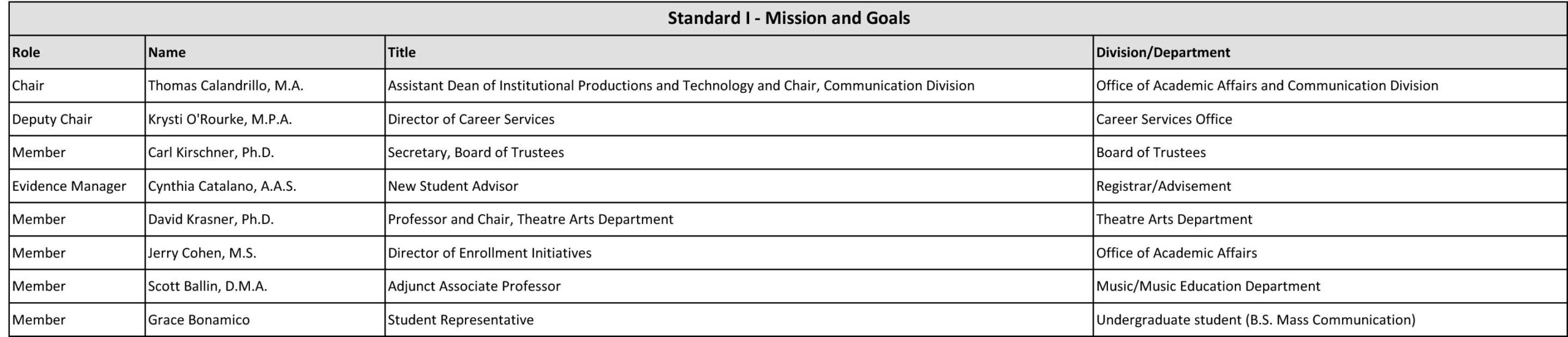
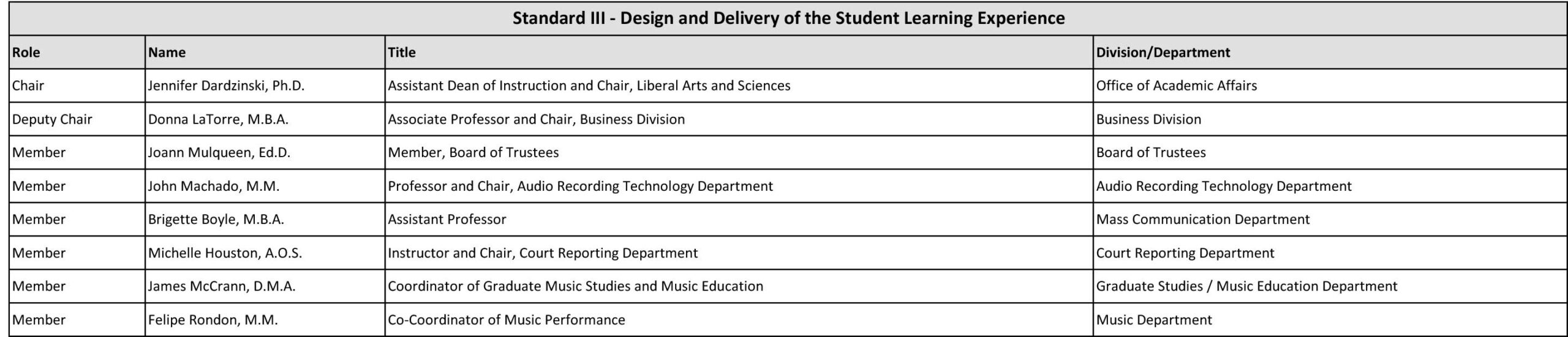
These Working Groups are composed of a diverse mix of professionals from across our community, including faculty (both full-time and adjunct), administrators, non-teaching personnel, members from the College’s Board of Trustees, and where appropriate, student representatives. Each Working Group will include a Chair and a Deputy Chair who also serve on the Steering Committee. The Chair and Deputy Chair will be responsible for coordinating the work of the Working Group, submitting drafts of reports on time, and working directly with the Co-Chairs of the Steering Committee to provide communication across the Working Groups and to represent their Group to the campus community when necessary.
General Working Group Charge
To ensure clarity and transparency regarding decision-making processes, roles, and responsibilities, the Working Groups are charged with the following tasks:
- Develop an understanding of the seven Standards of Accreditation and Requirements of Affiliation and of the criteria under the specific Standard assigned to the Working Group;
- Examine the connection between and engage in insightful discussions and analysis about the assigned Standard and the College’s institutional priorities, its mission, and its strategic plan;
- Hold regular meetings, which should be documented in meeting minutes that are saved to the Working Group’s folder within the Evidence Inventory folder on SharePoint/ OneDrive;
- Offer input and feedback to other Working Groups, when appropriate;
- Adhere to the Self-Study timeline and meet deadlines for deliverables as provided by the Steering Committee;
- Identify and collect evidence (e.g., policy documents, analyses, data set, minutes, etc.) that demonstrates compliance with the Group’s assigned Standard and that addresses the criteria under the Standard (examples of evidence documentation to be collected for each Standard are provided in Section XI: Evidence Inventory Strategy);
- Store and track all collected evidence in the Group’s assigned folder within the Evidence Inventory folder on SharePoint/OneDrive;
- Analyze evidence in relation to the Standard’s criteria and the College’s institutional priorities;
- Utilize existing assessment and institutional effectiveness data to assess the College’s strengths and weaknesses in relation to the Standard;
- Collaborate with other Working Groups and with the Steering Committee to address specific research questions/lines of inquiry, to identify gaps in the evidence or in processes or procedures, and to develop and implement strategies for addressing these gaps where feasible;
- Produce outlines, preliminary drafts, and a final 10–15-page report demonstrating compliance with the relevant Standard assigned to the Working Group. The report should address each of the criteria listed for the relevant Standard. Demonstrating compliance will involve providing evidence and creating an analytical narrative explaining how these items show that the College meets the given criteria. Based on the evidence collected and analyzed, the report will assess institutional strengths and weaknesses, identify distinction areas, and suggest improvement opportunities. The report should also provide an overview of how the Working Group addressed criteria regarding the institutional priorities they considered in relation to their assigned Standard;
- The Working Group should recognize that their submitted report will be used as source material for the Self-Study document and may or may not appear in its submitted form in the final Self-Study document;
- As the Steering Committee merges the individual Working Group reports into a single, coherent Self-Study document, the Working Group should be available to discuss revisions and answer any questions posed by the Steering Committee; and
- Participate actively in the Spring 2027 site visit.
Working Group Chair and Deputy Chair Charge
In addition to the responsibilities listed above, the Chair and Deputy Chair of each Working Group will also:
- Determine the Working Group meeting schedule and facilitate meetings;
- Develop meeting agendas in consultation with Group members;
- Orient the Working Group members to the Group’s charge;
- Ensure minutes are taken at each meeting and are saved in the Group’s folder within the Evidence Inventory folder on SharePoint/OneDrive;
- Designate an Evidence Manager for the Group who will be responsible for uploading and tracking all evidence collected by the Group;
- In collaboration with other members of the Working Group, write, revise, and edit documents produced by the Group;
- Ensure submission of all required documents to the Steering Committee in accordance with the established timeline and deadlines provided by the Steering Committee;
- Serve on the Steering Committee as representatives of the Working Group; and
- As part of the Steering Committee, work with Chairs and Deputy Chairs of the other Working Groups to ensure that the Working Group is collaboratively engaging in common areas of inquiry and reducing undue duplication of effort.
Working Group Membership and Evidence Expectations
Working Group 1 is tasked with examining Standard I: Mission and Goals, the description of which reads:
The institution’s mission defines its purpose within the context of higher education, the students it serves, and what it intends to accomplish. The institution’s stated goals are clearly linked to its mission and specify how the institution fulfills its mission.
In focusing its analysis, Working Group 1 will be expected to provide evidence showing:
- The mission accurately defines the purpose of the institution and the students it serves;
- The alignment of the institution’s mission and goals;
- The mission guides planning and resource allocation;
- The mission is publicized and well-known by the institution’s internal stakeholders;
- The institution’s mission and goals are approved and supported by the governing body; and
- The periodic assessment of the relevancy and effectiveness of the institution’s mission and goals.
Working Group 2 is tasked with examining Standard II: Ethics and Integrity, the description of which reads:
Ethics and integrity are central, indispensable, and defining hallmarks of effective higher education institutions. In all activities, whether internal or external, an institution must be faithful to its mission, honor its contracts and commitments, adhere to its policies, and represent itself truthfully.
In focusing its analysis, Working Group 2 will be expected to provide evidence showing:
- That institutional policies and procedures are fair and impartial;
- That all publications and communications, in all formats, for internal and external communities, are honest and truthful;
- That the College has documented grievance policies and procedures for all constituencies;
- That the College discloses information related to affordability, accessibility, funding options, and measures of student success;
- That services and programs promote affordability, accessibility, and informed decision-making regarding student debt;
- That the College has a campus climate that fosters respect among all constituencies;
- Compliance with all applicable federal, state, and Commission policies and regulations; and
- Periodic assessment of the effectiveness of all institutional policies and procedures and the manner in which they are implemented.

Working Group 3 is tasked with examining Standard III: Design and Delivery of the Student Learning Experience, the description of which reads:
An institution provides students with learning experiences that are characterized by rigor and coherence at all program, certificate, and degree levels, regardless of instructional modality. All learning experiences, regardless of modality, program pace/schedule, level, and setting are consistent with higher education expectations.
In focusing its analysis, Working Group 3 will be expected to provide evidence showing:
- That the College offers coherent learning experiences appropriate to the credential levels offered;
- That student learning experiences are designed, delivered, and assessed by appropriately credentialed professionals, sufficient in number, who are effective and rigorous in their teaching;
- That programs are of the appropriate length and rigor and foster a coherent learning experience;
- That faculty and/or other appropriate professionals are regularly and equitably reviewed and provided with opportunities, resources, and support for professional growth and innovation;
- That academic programs and expected outcomes are accurately described and enable students to understand and follow program requirements and time to completion;
- That the College provides sufficient learning opportunities and resources to support students’ academic progress through their degree program;
- That the general education program is sufficient in scope and addresses the identified areas;
- That graduate programs provide opportunities for research, scholarship, and independent thinking; and
- That there is periodic assessment of the effectiveness of student learning opportunities.
Working Group 4 is tasked with examining Standard IV: Support of the Student Experience, the description of which reads:
Across all educational experiences, settings, levels, and instructional modalities, the institution recruits and admits students whose interests, abilities, experiences, and goals are congruent with its mission and educational offerings. The institution commits to student retention, persistence, completion, and success through a coherent and effective support system sustained by qualified professionals, which enhances the quality of the learning environment, contributes to the educational experience, and fosters student success.
In focusing its analysis, Working Group 4 will be expected to provide evidence showing:
- Clearly stated policies, processes, and programs to admit, retain, and facilitate the success of all students;
- Processes designed to enhance the successful achievement of students’ educational goals
- Improvement of key indicators of student success, including retention and graduation rates;
- Sufficiently qualified professionals to provide effective support systems;
- Policies and procedures used to ensure student identity verification in distance education courses;
- Equitable policies to address the acceptance of credits and other alternative learning experiences;
- Published information regarding student achievement, including student outcome measures;
- The safe and secure maintenance and appropriate release of student information;
- That athletic, student life, and other extracurricular activities are regulated by the same principles and procedures that govern all other programs; and
- Periodic assessment of the effectiveness of student support programs and experiences.
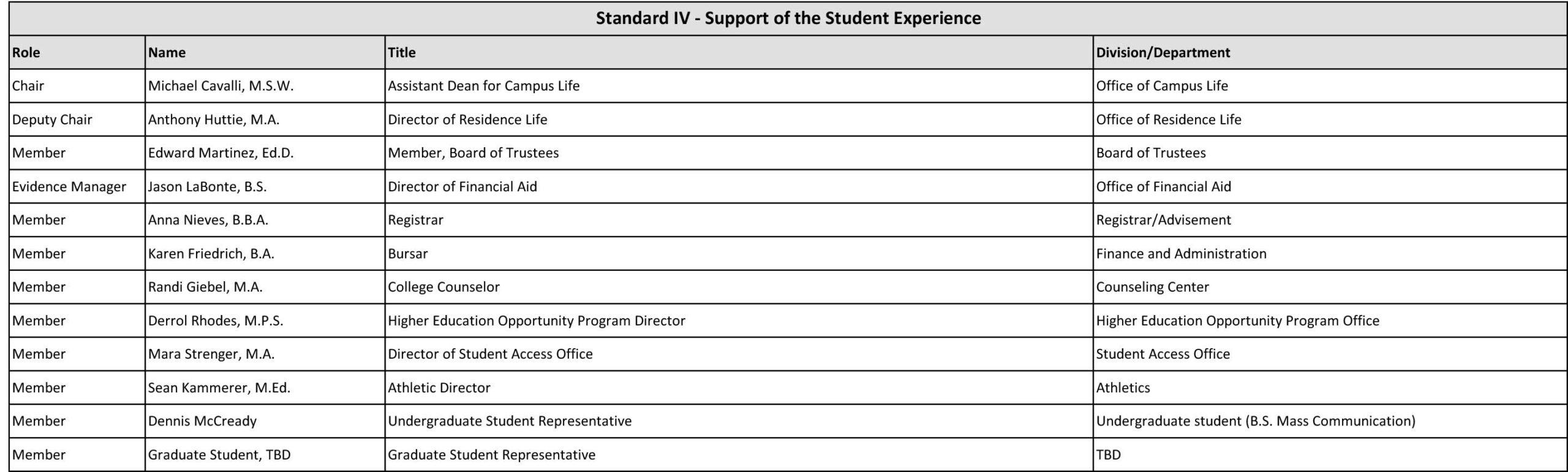
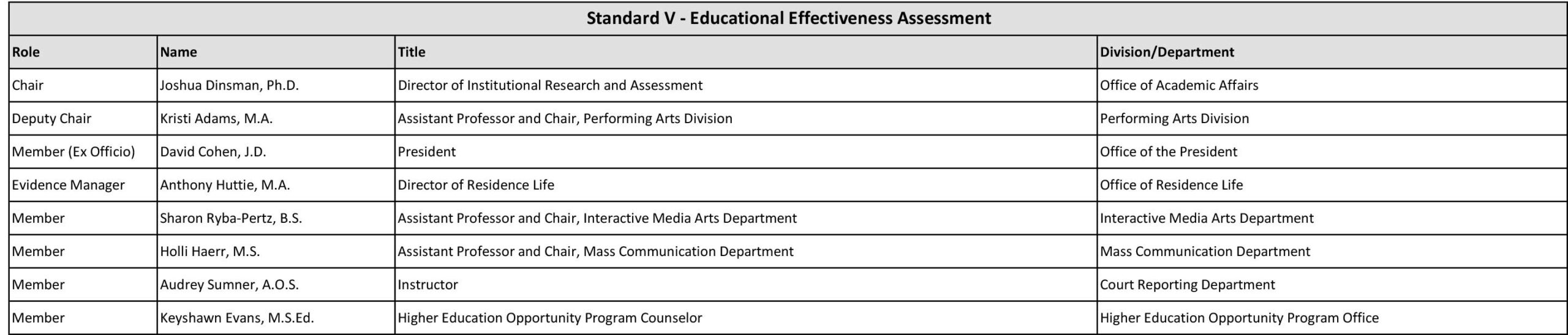
Working Group 5 is tasked with examining Standard V: Educational Effectiveness Assessment, the description of which reads:
Assessment of student learning and achievement demonstrates that the institution’s students have accomplished educational goals consistent with their program of study, degree level, the institution’s mission, and appropriate expectations for institutions of higher education.
In focusing its analysis, Working Group 5 will be expected to provide evidence showing:
- Clearly stated institutional and program-level goals which are aligned with each other and with the institution’s mission;
- The development and implementation of organized and systematic assessments that evaluate the extent of student achievement in both general education and in their degree program;
- Sufficient support to sustain the assessment of student achievement and to communicate results of assessment to stakeholders;
- Demonstrated and documented use of assessment results to improve educational effectiveness; and
- Periodic assessment of the effectiveness of assessment processes utilized by the institution for the improvement of educational effectiveness.
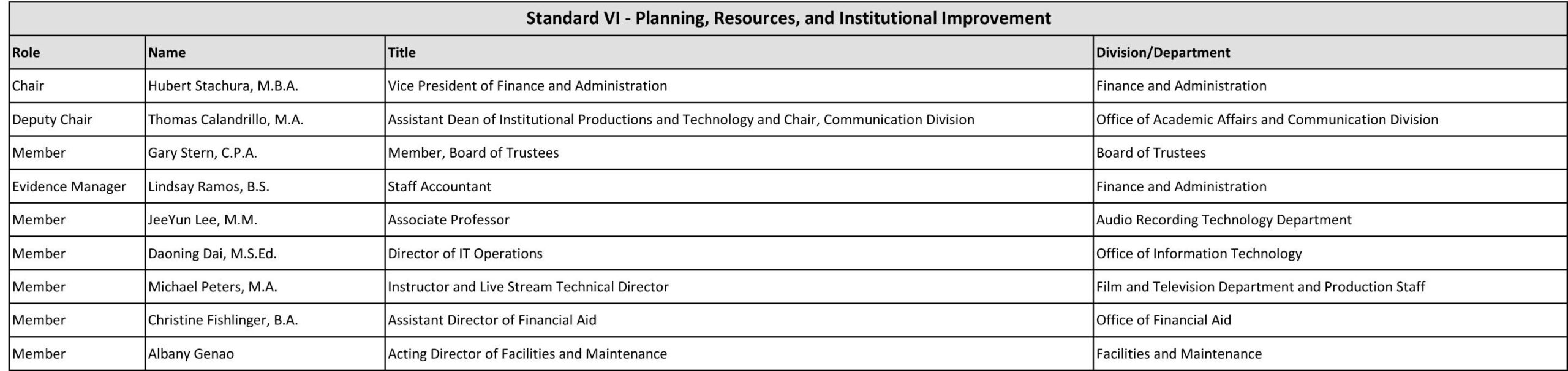
Working Group 6 is tasked with examining Standard VI: Planning, Resources, and Institutional Improvement, the description of which reads:
The institution’s planning processes, resources, and structures are aligned with each other and are sufficient to fulfill its mission and goals, to continuously assess and improve its programs and services, and to respond effectively to opportunities and challenges
In focusing its analysis, Working Group 6 will be expected to provide evidence showing:
- Clearly stated institutional and unit-level objectives that are linked to the College’s mission and that reflect conclusions drawn from assessment results;
- Clearly documented and communicated planning and improvement processes that provide for constituent participation;
- Comprehensive, long-range planning processes;
- Financial planning and budget processes that are aligned with the College’s mission, goals, and objectives and that are evidence-based;
- Adequate fiscal and human resources, including physical and technical infrastructure, to support operations;
- Clearly defined decision-making processes, with clear assignment of responsibility and accountability;
- Enrollment management planning linked to budget development;
- Demonstrated capacity to support enrollment increases;
- Strategies to address enrollment decline;
- Comprehensive planning for facilities, infrastructure, and technology that include consideration of sustainability and deferred maintenance;
- An annual independent audit confirming financial viability with evidence of follow-up on any cited concerns;
- The assessment of the adequacy and efficient utilization of institutional resources required to support the institution’s mission and goals;
- Sufficient resources to improve student achievement measures;
- The development and implementation of organized and systematic assessment of non-academic units;
- The development and implementation of organized and systematic assessments that evaluate institutional effectiveness; and
- Periodic assessment of the effectiveness of planning, resources allocation, institutional renewal, and availability of resources.
Working Group 7 is tasked with examining Standard VII: Governance, Leadership, and Administration, the description of which reads:
The institution is governed and administered in a manner that allows it to realize its stated mission and goals in a way that effectively benefits the institution, its students, and the other constituencies it serves. Even when supported by or affiliated with a related entity, the institution has education as its primary purpose, and it operates as an academic institution with appropriate autonomy.
In focusing its analysis, Working Group 7 will be expected to provide evidence showing:
- A clearly articulated and transparent governance structure that outlines roles, responsibilities, and accountability for decision-making by each constituency;
- A legally constituted governing body that has sufficient independence and expertise and is responsible for the academic quality, planning, and fiscal well-being of the institution;
- A governing body that provides oversight at the policy level and is informed in all its operations by principles of good practice in board governance;
- The establishment and implementation of written conflict of interest policies;
- A governing board that appoints and regularly evaluates the College President;
- A College President who has appropriate credentials, professional experience, authority, and autonomy required to fulfill the responsibilities of the position;
- Qualified administrators, sufficient in number, to enable the College President to discharge his/her duties effectively;
- A clearly documented administrative structure with members who possess the skills, time, assistance, technology, and expertise to perform their duties;
- An administration with regular engagement with faculty and students to advance the institution’s goals and objectives;
- Systematic procedures for evaluating administrative units and for using assessment data to enhance operations; and
- Periodic assessment of the effectiveness of governance, leadership, and administration

The following is a list of major activities and the timeframe in which they will take place as part of the Self-Study process.
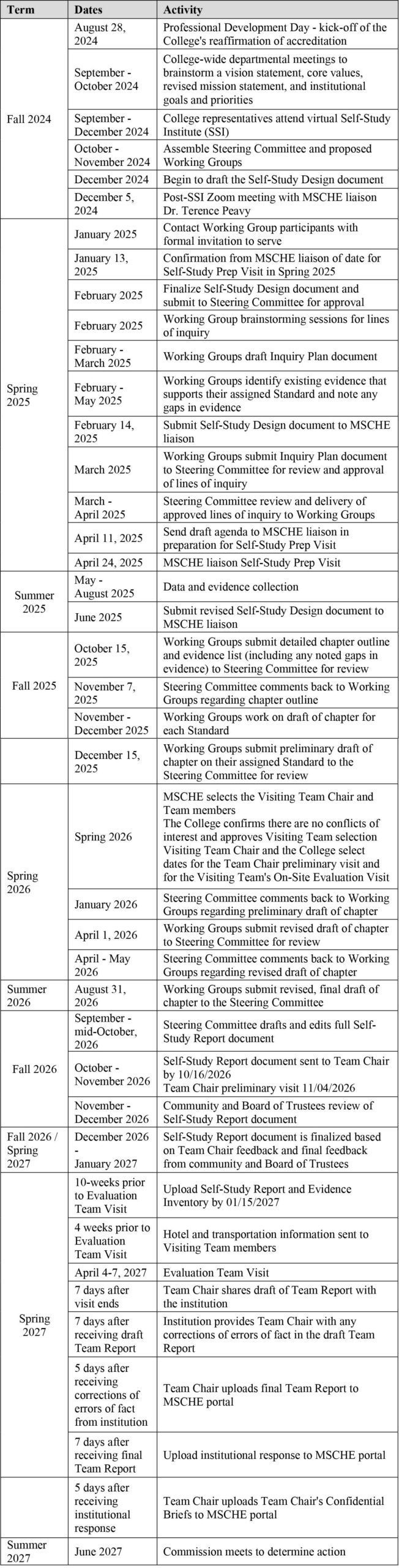
(Update Coming Soon.)